constellations still contain open work
123 are entirely open. Another 74 cross the open/closed boundary—the clearest evidence that ticket closure and problem resolution are not the same thing.
Hermes Agent · Nous Research · Public repository intelligence
Hermes Agent can traverse 740 issues as 343 source-proven problem identities, with every campaign route grounded in the public GitHub record.

Read the topology
The campaign did not erase duplicates. It turned them into routes—preserving every reproduction, repair attempt, contributor, and closure while giving each problem family one address.
123 are entirely open. Another 74 cross the open/closed boundary—the clearest evidence that ticket closure and problem resolution are not the same thing.
Existing GitHub references already completed 35.3% of the topology. The campaign inspected first and wrote only where a direction was missing.
235 of 279 comments are surgical single-target mutations. Dense fan-out appears only where recurrence actually demands it.
The fifteen-node maximum is not visual noise. It is a repeated systemic failure made visible as one identity.
Repository observatory
This is the public instrument—not a decorative hairball. Search any issue or exact-source ID, isolate unresolved topology, and follow every recorded route back to its GitHub comment.
0 constellations · 0 issues · 0 recorded routes in view
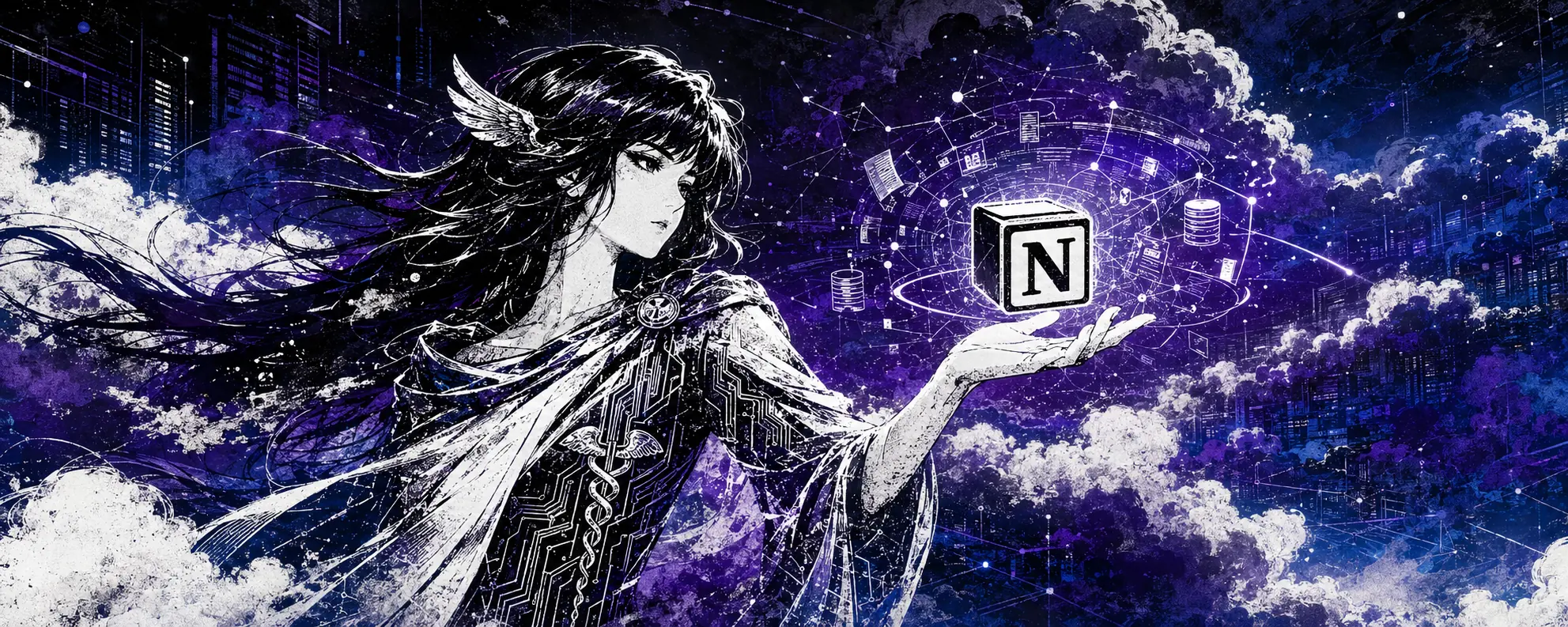
Hermes Agent / Project-level self-awareness
The second architecture
Every mature codebase develops an architecture of accumulated failures, repair attempts, recurrences, and overlapping proposals. GitHub stores the records chronologically. The Interlock Graph gives those records semantic identity.
A March report and a July report can share a root cause while living thousands of rows apart. A closed issue can carry the best reproduction for a defect still open elsewhere. Search finds words; semantic identity finds the problem.
Every member retains its author, traces, screenshots, experiments, and closure history. The canonical issue becomes an address for the family. Nothing is flattened into anonymity and no contributor’s evidence is discarded.
Hermes possesses a durable, inspectable representation of her own problem topology. She can locate prior instances of the same defect, distinguish a closure from a resolution, and begin new engineering work with inherited context instead of a blank page.
The breakthrough is not the visualization. It is where the graph lives.
Native placement
This is not a private Notion board, an external spreadsheet, or a graph database competing with GitHub for authority. The public issue history remains the source of truth. This site is a materialized lens over that history.
Any human or autonomous worker able to read the repository can traverse the same semantic routes, inspect the same authorship, and audit the same public comments.
Operational vocabulary
No change to Git’s object model was required. Issues, comments, references, timestamps, and authorship were composed into an explicit identity and routing layer.
The definitive routing point for one problem identity—not mechanically the oldest or only open issue.
The complete source-proven membership set sharing one underlying semantic identity.
A public issue comment that adds a missing, navigable direction between members.
A stable content-derived anchor that persists when titles and descriptions drift.
The auditable record of what the campaign wrote, where it wrote it, and what it targeted.
A machine-readable view derived from public repository history, never a replacement for it.
Directed machine labor
The human work was to define identity, evidence thresholds, canonical election, mutation discipline, and the operational objective.
The agent work was exhaustive traversal, comparison, indexing, and precision materialization across 740 issue records.
This is architecture expressed through directed machine labor—not automation theater and not a human clicking faster.
The operating protocol
The campaign preserved semantic identity and provenance through the smallest correct mutation set. One planned source was skipped because its required direction already existed.
Locate true semantic duplicates and near-duplicates by problem identity, not title similarity.
Choose the issue best suited to carry identity and future routing while preserving every contributor’s evidence.
Write only the missing public references needed to complete the known topology.
Assign one exact-source identity to the entire constellation so its identity survives surface mutation.
Record membership, canonical election, campaign comments, and artifact receipts for reproducibility.
No new campaign comment required.
Missing public directions added.
Every source-proven identity accounted for.
A pile of records is memory.
Hermes Agent can now inspect the history of her own defects, recognize recurring identities, preserve prior evidence, and route new work into the correct semantic context.
Return to the graph ↑Reproducibility
The public GitHub record is authoritative. These files are a dated, machine-readable materialization of the campaign and its source index.
2c7f0dde429bbb590aaffefcedaf04ad0648ba7554a56d21c4fa95e524a186a3e445ac0c464b4fac63a2645c509bd9b7945a7f6df2ec59d476ec2b30579a198bIntegrity anchors are recorded from the campaign artifacts. Verification requires the corresponding artifact snapshot; the downloadable graph and public source index below expose this site’s complete evidence layer.
Visual system: canonical Hermes girl artwork from the Nous Research campaign reference set. Interface tokens and cover artwork: Hermes Skins Pack, © 2026 BChop, MIT.